In such conditions, expectations are for house prices to moderate, since credit will not be offered as generously as earlier, and "people are going to not be able to pay for rather as much home, given higher interest rates." "There's a false narrative here, which is that the majority of these loans went to lower-income folks.
The financier part of the story is underemphasized." Susan Wachter Wachter has written about that refinance boom with Adam Levitin, a teacher at Georgetown University Law Center, in a paper that describes how the housing bubble happened. She remembered that after 2000, there was a substantial expansion in the money supply, and interest rates fell considerably, "triggering a [refinance] boom the likes of which Find more information we had not seen prior to." That stage continued beyond 2003 since "lots of players on Wall Street were sitting there with absolutely nothing to do." They identified "a new type of mortgage-backed security not one associated to refinance, but one associated to broadening the home loan financing box." They also found their next market: Borrowers who were not sufficiently certified in regards to earnings levels and deposits on the houses they purchased in addition to financiers who were excited to buy - how did clinton allow blacks to get mortgages easier.
Rather, investors who took advantage of low home loan finance rates played a huge function in sustaining the real estate bubble, she explained. "There's an incorrect narrative here, which is that most of these loans went to lower-income folks. That's not real. The investor part of the story is underemphasized, however it's real." The evidence reveals that it would be inaccurate to describe the last crisis as a "low- and moderate-income occasion," stated https://www.openlearning.com/u/arrieta-qg8o6c/blog/TheUltimateGuideToHowSubprimeMortgagesAreMarketDistortion/ Wachter.
Those who might and wished to cash out in the future in 2006 and 2007 [took part in it]" Those market conditions also brought in customers who got loans for their second and third homes. "These were not home-owners. These were investors." Wachter stated "some scams" was likewise included in those settings, especially when individuals noted themselves as "owner/occupant" for the homes they financed, and not as financiers.
What Are The Main Types Of Mortgages Can Be Fun For Anyone
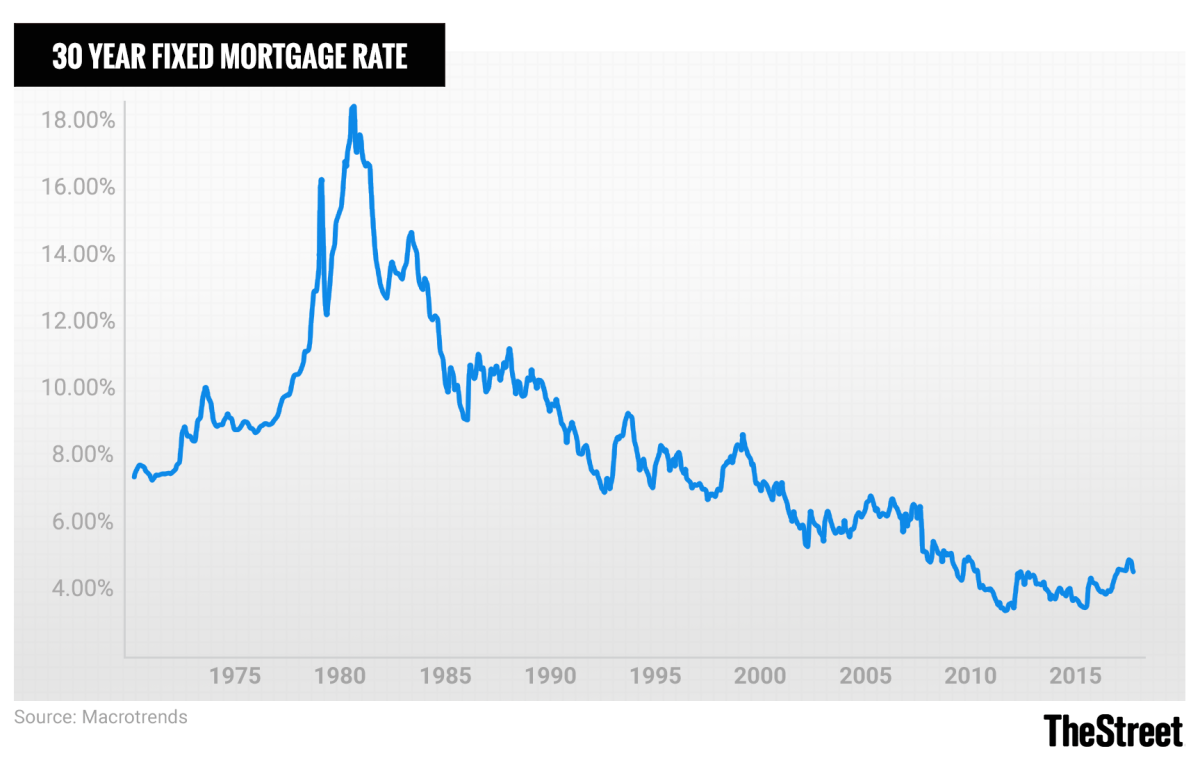
" If you're an investor leaving, you have absolutely nothing at threat." Who paid of that at that time? "If rates are decreasing which they were, effectively and if down payment is nearing no, as a financier, you're making the cash on the advantage, and the drawback is not yours.
There are other unfavorable effects of such access to inexpensive money, as she and Pavlov kept in mind in their paper: "Asset rates increase because some customers see their borrowing restraint relaxed. If loans are underpriced, this result is amplified, because then even formerly unconstrained customers efficiently pick to buy instead of lease." After the housing bubble burst in 2008, the variety of foreclosed houses readily available for investors surged.
" Without that Wall Street step-up to purchase foreclosed residential or commercial properties and turn them from house ownership to renter-ship, we would have had a lot more downward pressure on rates, a lot of more empty homes out there, selling for lower and lower prices, causing a spiral-down which took place in 2009 without any end in sight," said Wachter.
However in some ways it was necessary, since it did put a floor under a spiral that was taking place." "An essential lesson from the crisis is that just because somebody wants to make you a loan, it doesn't imply that you should accept it." Benjamin Keys Another frequently held understanding is that minority and low-income homes bore the brunt of the fallout of the subprime financing crisis.
Fascination About What Percentage Of People Look For Mortgages Online
" The reality that after the [Terrific] Economic crisis these were the households that were most hit is not evidence that these were the families that were most provided to, proportionally." A paper she composed with coauthors Arthur Acolin, Xudong An and Raphael Bostic took a look at the boost in house ownership during the years 2003 to 2007 by minorities.
" So the trope that this was [triggered by] lending to minority, low-income homes is just not in the information." Wachter also set the record directly on another element of the marketplace that millennials choose to lease rather than to own their houses. Studies have shown that millennials desire be homeowners.
" Among the major results and not surprisingly so of the Great Economic downturn is that credit history needed for a home mortgage have increased by about 100 points," Wachter kept in mind. "So if you're subprime today, you're not going to be able to get a home mortgage. And lots of, numerous millennials sadly are, in part since they might have handled trainee financial obligation.
" So while deposits don't have to be large, there are truly tight barriers to gain access to and credit, in terms of credit history and having a constant, documentable earnings." In terms of credit access and danger, because the last crisis, "the pendulum has actually swung towards a very tight credit market." Chastened maybe by the last crisis, increasingly more people today prefer to lease rather than own their home.
The Only Guide for What Percentage Of Mortgages Are Below $700.00 Per Month In The United States
Homeownership rates are not as buoyant as they were between 2011 and 2014, and regardless of a slight uptick recently, "we're still missing out on about 3 million property owners who are renters." Those three million missing out on homeowners are people who do not get approved for a home loan and have ended up being renters, and subsequently are rising leas to unaffordable levels, Keys kept in mind.
Prices are currently high in growth cities like New York, Washington and San Francisco, "where there is an inequality to start with of a hollowed-out middle class, [and in between] low-income and high-income occupants." Locals of those cities face not just higher housing costs but also greater rents, that makes it harder for them to conserve and ultimately buy their own home, she added.
It's simply a lot more tough to become a property owner." Susan Wachter Although real estate rates have rebounded in general, even adjusted for inflation, they are refraining from doing so in the markets where houses shed the most value in the last crisis. "The comeback is not where the crisis was concentrated," Wachter said, such as in "far-out suburban areas like Riverside in California." Instead, the need and higher rates are "concentrated in cities where the jobs are." Even a decade after the crisis, the real estate markets in pockets of cities like Las Vegas, Fort Myers, Fla., and Modesto, Calif., "are still suffering," stated Keys.
Clearly, home prices would reduce up if supply increased. "House builders are being squeezed on 2 sides," Wachter stated, describing increasing costs of land and building, and lower demand as those elements push up prices. As it happens, the majority of brand-new construction is of high-end homes, "and understandably so, because it's costly to construct." What could help break the trend of increasing real estate prices? "Sadly, [it would take] a recession or a rise in rates of interest that maybe causes a recession, along with other factors," stated Wachter.
Our How Do Adjustable Rate Mortgages React To Rising Rates PDFs
Regulatory oversight on loaning practices is strong, and the non-traditional loan providers that were active in the last boom are missing, however much depends upon the future of regulation, according to Wachter. She particularly referred to pending reforms of the government-sponsored business Fannie Check out the post right here Mae and Freddie Mac which ensure mortgage-backed securities, or packages of real estate loans.